March 27, 2026
Bridging the Gap: Collaborative Partnerships to Ensure Clean Water for Every Community
Welcome back Fairness First readers!
Last Sunday was World Water Day! Held on March 22, this United Nations observance provides an opportunity to reflect on the vital importance of freshwater and highlight the work of people who are addressing global water access, sanitation, and conservation challenges for communities around the world. Dr. Diana Calvo Martinez is dedicated to fostering equitable water access the world over. We spoke to her about her work, building people-centered engineering interventions, and what keeps her going.
Introducing Dr. Diana Calvo Martinez
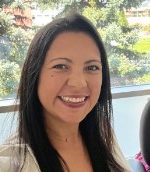 Diana Calvo Martinez is an assistant professor at NAU in the Department of Civil Engineering, Construction Management, and Environmental Engineering specializing in environmental biotechnology. Originally from Bogota, Colombia, Diana completed her undergraduate and master’s degrees at Universidad de Los Andes (University of the Andes) where she also served as a junior professor and began working with Engineers Without Borders, focusing on water security. She completed her PhD at Arizona State University and soon after moved to NAU to accept her current position that enables her to do the work she loves: addressing water security for underserved communities.
For her Pilot Project, Diana partners with an Indigenous community in the Southwest to address drinking water quality. As the primary investigator on the project, she collaborates with two co-investigators- NAU’s Drs. Armando Medinaceli, Lucero Radonic, Crystal Hepp, Greg Caporaso, and Jani Ingram- an excellent team of community partners, and several NAU students.
How do you blend anthropological frameworks with biotechnical methods and techniques into the fabric of this project?
DCM: In general, research projects and funders are looking for a solution or some type of implementation. Sometimes, as technical people – engineers, in my case – we focus on the solution and forget who we are serving. For example, I might think of a membrane reactor that can clean water. I would want to install this device somewhere to remove contaminants but then realize that we don’t have the operational capabilities in place, the materials needed for installation, or it just does not match the context in which we’re putting the technology. Sometimes we forget about the context and the main thing about context is people. You need to look for a solution that takes into consideration what people think, what people like, and the cultural meanings people assign to aspects of the project.
That’s where the anthropological framework comes in; we are always collaborating with the involved communities. It’s crucial to have a connection with community members and to understand each other’s priorities so that you can come to a shared perspective on the project and its implementation. Because we’re aware that the human element to our work is important, we have two anthropologist* co-investigators on the team. As anthropologists, Armando Medinaceli and Lucero Radonic bring nuanced perspectives to our work with our community partners. In this project, it’s important that we connect cultural meanings of water and how people perceive water to the technical methods that we use to understand water.
*Anthropologists study humans. They look at human biology, social habits, beliefs, behaviors, and languages across time and culture.
How do you engage with community and practice allyship or advocacy in your research?
DCM: We always try to engage with community members before beginning a project. We visit, have coffee, and chat with the community, eventually coming around to the subject of water: its access, quality and if there’s anything we can work on together to improve quality of life for this specific community. A cornerstone of this relationship building is that I approach communities and community members with a deep respect for their beliefs, knowledge, and ways of thinking – and I present myself as an ally.
Our research team agrees on how important it is to be allies through our research and work and we’ve discussed this idea with other professors at NAU. My research team is highly diverse, and we work with diverse communities with the goal of improving quality of life as much as we can.
What is personally the most exciting aspect of your research?
DCM: It sounds sort of funny, but I love everything about my research. I love what I do, I love my job, I love teaching and I love the research and service parts as much as anything else. I enjoy when the projects and the data collected are useful to the communities and they are able to go after more funding or ask for support from state and federal agencies for water related projects, such as a water treatment plant. Seeing the social and real world impacts our research can have on health improvements is the most exciting part of it. On top of that, mentoring is pretty amazing. It makes me happy to know that the students on our research team are so passionate. I try to do the best I can to support them. They are the people who are going to be in the world doing meaningful, community-changing work in the near future!
World Water Day was this past Sunday, March 22nd. Historically, the core focus of the day has been achieving water and sanitation for all by 2030. From where you stand, what can equitable water access look like?
DCM: I’m actually working on a water security course, and this is one of the questions that we have to consider. We have sustainable development goals that need to be achieved by 2030. The sixth goal is water security, and I think in terms of WASH – WAter, Sanitation, and Hygiene. There are so many parts of the puzzle that need to happen to have equitable and good access to drinking water, or at least, some type of better water quality. We need to consider policies, historical differences and inequities in access, and the cultural meanings of water. We also need to consider the sorts of technologies and materials that are accessible in different countries and around the world. For me, equitable water access means that everybody around the world has the same opportunity to access clean water. On top of addressing sanitation and quality, it also means addressing communities’ and individuals’ relationships to water. It can’t just be about building physical and technological infrastructure, but having that infrastructure reflect the people and cultures where they’ll be used.
Interested in learning more about community health research at NAU?
Visit CHER’s social media for short stories that highlight SHERC researchers, students, lab spaces, and more! Look for “Fit it in a Minute” posts.