April 17, 2026
Listening First: Reimagining Care Through Occupational Therapy
with Jess Salyers and Emily Rich
This April we’re observing Occupational Therapy Month, a time to “recognize how occupational therapists support people with cognitive, physical, and mental health conditions in living meaningful, everyday lives.” Jess Salyers and Emily Rich are partners in SHERC’s Community Campus Partnership Support Program (CCPS). Their project focuses on improving care and understanding for people living with complex chronic conditions like Ehlers-Danlos Syndrome (EDS), Postural Orthostatic Tachycardia Syndrome (POTS), and Mast Cell Activation Syndrome (MCAS).
About the Partners
Emily: I’m an occupational therapist (OT) and researcher based in Tucson, Arizona. I work in an outpatient setting, some of my patients include individuals living with EDS, POTS, and MCAS, and I’ve been working with this population for about eight years. Alongside my clinical work, I’m also a researcher focused on these conditions. What originally drew me to this work is that I live with these conditions myself and that continues to drive my commitment to improving care and support for this community.
Jess: I’m originally from Ohio, and I’ve been in Arizona since 2009. I moved here as an OT and have spent time in both Tucson, where I met Emily, and now Phoenix. I have a personal connection to this work through an immediate family member who lives with these conditions, which shapes how I think about my role. As a professor, I’m always asking how I can use my position to do more, to do good, and to give power to underserved and historically marginalized communities. In this project, my role has been helping create the space for this work to happen, but it truly wouldn’t exist without my partnership with Emily.
The Story Behind Their Partnership
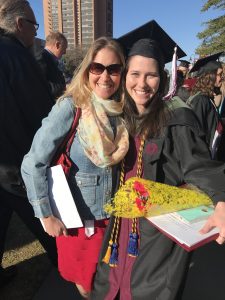
Emily: We’ve been connected for a long time, and our experiences have kind of evolved alongside each other. I always say Jess is the reason I became an OT, the way that she practiced as a pediatric OT inspired me. It’s been really unique how our paths have aligned. We’ve been able to take what we’ve both gone through, personally and professionally, and turn it into something beautiful.
Jess: Our partnership really started years ago when we worked together in Tucson. It’s been over a decade of knowing each other and growing in our careers, and this project feels like a natural extension of that. It’s really meaningful for me to be able to do this work alongside Emily.
Understanding EDS, POTS, and MCAS
Emily: Ehlers-Danlos Syndrome (EDS) affects the body’s connective tissue like joints and skin. For many people, this means their joints are very loose and can easily slip out of place or get injured. Day to day, this can look like ongoing pain, frequent injuries, and feeling extremely tired. It doesn’t just affect their joints, it can also cause digestive issues. A lot of immune issues and other body systems are involved as well which can lead to the other diagnoses such as POTS and MCAS, among many others, or it can happen in isolation.
Postural Orthostatic Tachycardia Syndrome (POTS) is a form of autonomic dysfunction where the body has difficulty adjusting to gravity. When someone with POTS moves from lying down to sitting or standing, their heart may start racing, and they might feel dizzy, lightheaded, or foggy. Even simple things like standing in line or walking around can be exhausting. Someone with POTS might also have digestive problems and challenges with regulating their body temperature. POTS is more common after an infection and since COVID-19 we’ve seen a doubling in the number of people with POTS.
Mast Cell Activation Syndrome (MCAS) affects the body’s immune system. Mast Cells are allergy cells and so this can cause the body to be oversensitive to everyday things. For example, things like heat, exercise, chemicals, insect bites, certain foods, or even smells can cause allergic-type reactions and make it hard to tolerate daily environments.
Since these conditions affect multiple body systems, individuals often feel like they have many unrelated health issues and may spend years seeing different specialists without clear answers which can be exhausting and isolating. I appreciate my role as an OT because I get to tell people that these symptoms are real and all very connected, that they’re not dealing with a million separate problems. There’s often a sense of relief in realizing, I’m not alone, and I’m not imagining this.
Inside the Project – Addressing Health Disparities in EDS, POTS, and MCAS: A Community Partnership Approach
Emily: This project offers virtual workshops for adults in Arizona living with Ehlers-Danlos Syndrome (EDS), Mast Cell Activation Syndrome (MCAS), and/or Postural Orthostatic Tachycardia Syndrome (POTS). Because these conditions often overlap and are frequently underrecognized, the workshops focus on providing accessible, practical education to help participants manage fatigue, pain, and challenges in daily functioning. By using Zoom, the program removes geographic barriers and creates opportunities for connection among people with shared and overlapping experiences.
This project is important because it increases access to information, to support, and to care that is often difficult to find for these conditions. It creates space for participants to learn strategies they can apply in their daily lives and builds a community with shared understanding. Just as importantly, it elevates patient voices to help inform future research and improve the quality of care for these conditions.
Jess: Alongside the workshops, the project is intentionally structured as listening sessions. It began with the development of an interprofessional advisory board that includes an occupational therapist, physical therapist, physician assistant, and researcher. All of them, in some capacity, have a personal positionality to the participants. Together this board helps guide our work with both clinical expertise and lived experience. Through a series of five monthly sessions participants engage in guided discussions and share their experiences navigating healthcare systems, including challenges like misdiagnosis, medical trauma, and feeling dismissed. As a way of acknowledging their time we’ve dedicated a “give-back” component to each of our sessions, where experts provide meaningful education to the participants.
What has stood out most is the strength and generosity of the community itself. Time and time again, people have stepped forward to offer their knowledge, volunteer their time, and even help us find speakers. There is a deep sense of investment and eagerness to serve that is reflected in the process and outcomes of this work. There has been so much rupture in the relationships between patients and this larger healthcare system. So, this approach matters because it shifts the focus from simply delivering healthcare information to actively listening and responding. We want to validate a patient’s experience and integrate their input into care and future research efforts.
What We Wish More People Knew
Emily: I wish people understood how invisible and dynamic these conditions are. I wish they understood how much this can impact daily life. Symptoms can change from day to day, making it hard for even friends and family to fully understand what someone is experiencing. Someone might look fine one day and be struggling the next, or appear completely okay on the outside but be dealing with intense pain, fatigue, or other symptoms that aren’t easy to see. A lot of people have spent years being told by providers their symptoms aren’t real or that it’s “all in their head,” and that really affects how they interact with healthcare. Many people feel like they have to explain or prove what they’re going through and are often doubted. Because of this there can be a lot of mistrust between this community and healthcare providers, and for good reason. I’ve even had patients walk into my office really cautious and really protective.
These conditions have a wide range of experiences and no two people look the same, even if they share a diagnosis. But despite that variation, the stories people share are often very similar; years of being told their symptoms aren’t real, long delays in diagnosis, and difficulty finding care. Over time, this takes a toll. Many people enter healthcare spaces feeling guarded or anxious, not because they want to, but because of how they’ve been treated in the past. It takes time to build trust and that matters at every level, from the front desk to the provider.
Jess: I wish more people, especially within healthcare systems, understood how often these conditions are dismissed as “too complex” or “too rare.” When that happens, it can reflect underlying assumptions about whose experiences are prioritized and what conditions are seen as worth the time and effort to understand. That mindset is rooted in *ableism, and we need to do better especially in how we educate and train future providers. When these conditions are overlooked in this way it can limit curiosity, reduce investment, and result in fewer resources dedicated to helping this community.
*Ableism is when people, systems, or communities treat disabled people as less important, less capable, or less worthy of care, respect, and belonging.
I also think we need to rethink what it means to be a healthcare provider. There’s often an unspoken belief that providers have to be able to do everything physically in order to care for others. That mindset can exclude people with chronic conditions from entering healthcare or helping professions where they can contribute immensely to their fields, research, and education. It is these lived experiences that actually deepen empathy, understanding, and the ability to connect with patients. In my work with students, I see how important accessibility and flexibility are. Many students are navigating their own health conditions while trying to succeed in rigorous programs, and too often they’re met with barriers instead of support. It’s important to think about how we can expand access through small changes like allowing students to sit, rest, or engage in different ways. This doesn’t lower standards, it creates opportunities for more people to succeed and contribute meaningfully to the field.
Lastly, I wish people understood that because these symptoms are unpredictable and hard to manage, it becomes harder for people to engage in activities that give their lives meaning; things like spending time with friends, working, or even completing basic daily tasks. Over time, this can lead to isolation and disconnection.
How We Support and Connect with the Community
Emily: Accessibility is a huge priority for us. We’ve made everything virtual, we offer closed captioning, and we try to provide resources that people can actually use. It’s about meeting people where they are and recognizing that even attending something like this can take a lot of energy.
Jess: We’re really intentional about creating inclusive spaces. We want people to participate in ways that work for their bodies and daily lives. All sessions are fully virtual over zoom and include closed captioning. This means that they can join from wherever they’re most comfortable, even from bed and we include breaks to support their needs whether that’s resting, getting water, or taking care of their health. We are all in this together and we want our participants to feel supported.
Guidance for Building Strong Community-Academic Partnerships
Emily: It is really important to stay open to what the work can become. When we started, we didn’t have everything figured out and we still don’t always know exactly what’s next. But being willing to start, listen, and adapt has been essential. Community partnerships aren’t something you can fully plan in advance; they evolve over time. That also means being flexible and responsive to feedback. There have been moments where participants shared things that made us pause and rethink our approach whether it was how we structured sessions or how we communicated. Instead of getting stuck in our original plan, we adjusted and made changes. Ultimately, the goal is to build something together that reflects what the community actually needs, not just what you initially imagined.
Jess: I would say you really have to honor the people in your community with lived experience. It’s easy to think you’re being community-centered, but that requires ongoing reflection. Are you really listening, and are you carrying forward what people share? Or are you unintentionally filtering out perspectives that don’t align with your original plan or comfort level? Being community-informed means staying accountable to what is shared, even when it challenges your assumptions.
Strong partnerships also rely on mutual respect and support. In our work, that means recognizing each other’s strengths and contributions, and being intentional about building relationships that are collaborative rather than hierarchical. It’s also been important to bring in diverse perspectives like forming an interprofessional advisory board so the work isn’t shaped by just one lens, but reflects a broader more inclusive understanding.
If this work resonates with you, below are opportunities to listen, learn, and be part of ongoing change:
- Register for Jess and Emily’s Final Session available to AZ residents (May 16, virtual + free) https://www.otemily.com/communitypartnership
- Check out Emily’s Instagram @emilyrichot
- Stanford Disability in Medicine Conference (April 25, free + virtual for students) https://smadie.stanford.edu/conference/
- EDS ECHO Healthcare Student Program (Sept 2026 – July 2027, free + virtual, fills up fast) https://www.ehlers-danlos.com/eds-echo-healthcare-student-program/ ‘
- Emily and NAU Students Presenting Poster at AOTA Conference (April 24 – 25) https://inspire.aota.org/about/
You can also reach out to the partners to learn more about their work!
Emily Rich: OTEmilyrich@gmail.com
Jess Salyers: Jessica.salyers@nau.edu
Interested in learning more about community health research at NAU?
Visit CHER’s social media for short stories that highlight SHERC researchers, students, lab spaces, and more! Look for “Fit it in a Minute” posts.