November 20, 2025
Putting together the Puzzle Pieces: Harnessing Partnerships to Address Community Needs
Welcome back Fairness First readers!
It’s November 20th and we’re celebrating National Rural Health Day! Established by the National Organization of State Offices of Rural Health, this observance provides an opportunity to reflect on the “Power of Rural” and highlight the work of people who are addressing unique healthcare needs of rural American communities. As Regional Director for First Things First in the Yavapai Region, Lisa Blyth is intimately tied to the region. We spoke with her about how she takes a collaborative, system-level approach to address a variety of rural health needs in her community.
Introducing Lisa Blyth and First Things First
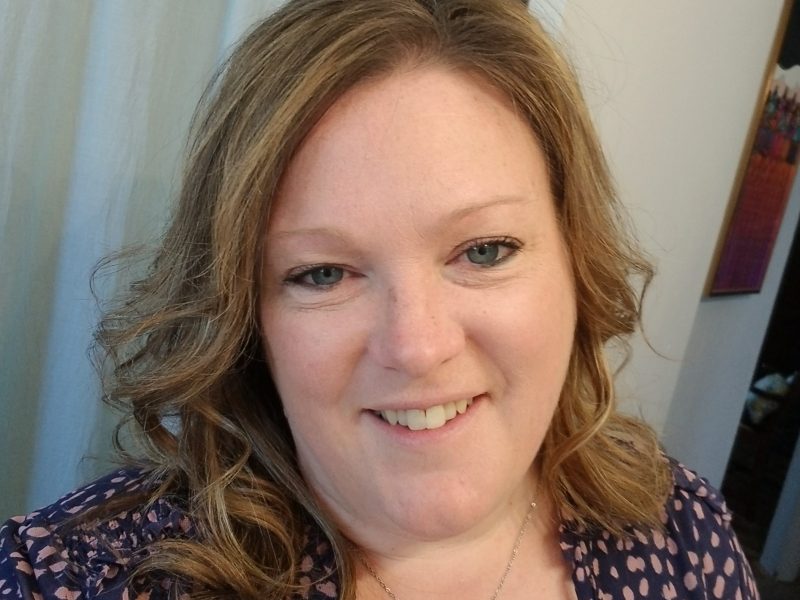
Lisa Blyth is a Regional Director for First Things First in the Yavapai Region. Born in Massachusetts, Lisa grew up in Michigan, where she earned her Bachelors of Science in Psychology at Central Michigan University. After finishing her Masters in Community Psychology at the University of New Haven and later spending some time in Iowa, she moved to Arizona 26 years ago and has been here ever since. Having spent plenty of time working in community behavioral health settings focusing on families and children, Lisa became interested in early brain development, recognizing the first five years as a critical period in life. Following some time living and working in Maricopa County, Lisa was able to move back North after earning her place as Regional Director where she gets paid to do what she loves.
Funded by taxes from tobacco products, First Things First is Arizona’s early childhood agency dedicated to healthy learning and development within the first five years of life. First Things First was created by a voter initiative in 2006 that addressed the absence of an early childhood organization in the state. Lisa’s work focuses on the Yavapai region, which includes all of Yavapai County, all of Sedona, and Yavapai Apache Nation.
In her position and throughout her career, Lisa has dedicated her work and time to the tenets of the collective impact approach and systems change practices. We are excited to share her approach to addressing rural health needs through community partnerships.
What does systems change mean to you?
LB: I always get an immediate visual when I think of systems change. When I was a little kid we had this plastic toy – it had little gears that were primary colors and you put them together like puzzle pieces. The whole system is all of the pieces that interconnect. If the gears aren’t completely connected or the puzzle pieces aren’t put together smoothly, you can spin one gear and it doesn’t affect the rest of the system. Applying this to systems change, I think about how we can get all of the gears – or organizations, projects, programs, etc. that make up a system – to interlock. If one piece of the toy or system moves, the rest of the parts move. A systems change approach asks us to consider what happens if the parts in a system aren’t as ideal or functional as we need them to be? Systems change to me is really about big picture thinking and being able to hold all of those pieces in your mind at the same time and consider the interrelatedness of everything. You have to generate ideas, and you have to test them out with each other. You have to figure out what’s going to work, and you have to put your own ego aside and figure out possible solutions.
What is collective impact? What makes this approach effective and powerful?
Generally, collective impact refers to a specific approach to systems change that brings together collaborators from different sectors to address a shared goal.
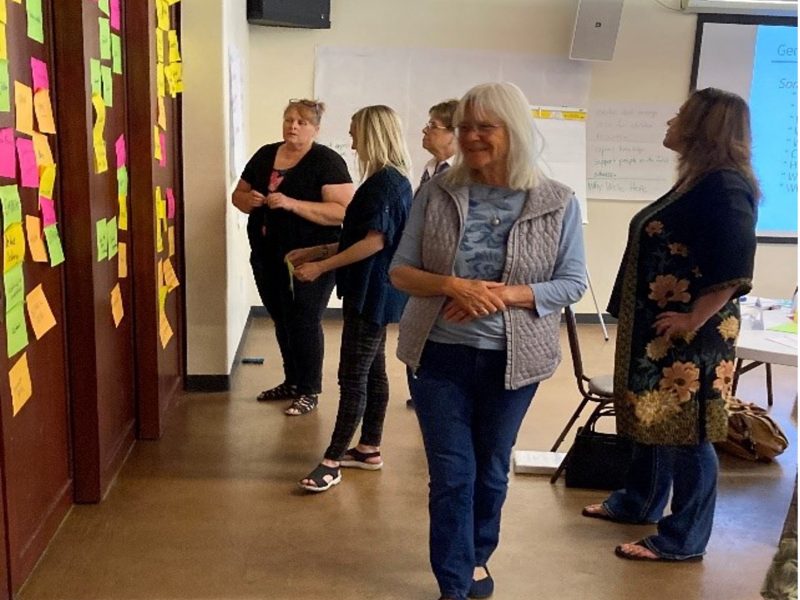
LB: I can’t remember directly how I got introduced to collective impact but between Paul Schmitz – a senior advisor at the Collective Impact Forum – and the Collective Impact Forum, I became a lifetime student of understanding the best practices of collective impact. The anchor piece for me is the common agenda*. The common agenda is really about what needs to happen in our communities. Whenever a group of people comes to the table to address something, each person comes as an individual. People naturally come with their job titles, experiences, and organizational priorities. Those perspectives add valuable context, but they aren’t meant to lead the work. In collective impact, we intentionally set those agendas aside so the group can co-create a common agenda based on community needs.
*Common agenda: A principle of collective impact, the common agenda is a shared vision and plan for change that includes a shared understanding of the issue.
How did you get started with systems change work?
LB: Before First Things First became a statewide organization, I belonged to a group of early childhood specialists in Yavapai County called Yavapai Communities for Young Children (YCYC). We knew the 2006 initiative for an early childhood organization was coming and decided to do some precursor work in our own communities so that we would have data and information to share once the organization was developed. We were part of a push for local advocacy to vote yes on the proposition and supported the development of the first Regional Partnership Council. As I grew professionally, I saw that stepping into leadership roles would give me more leverage to advance the systems-level change work I cared about.
Can you tell us about First Things First’s collective projects and partnerships?
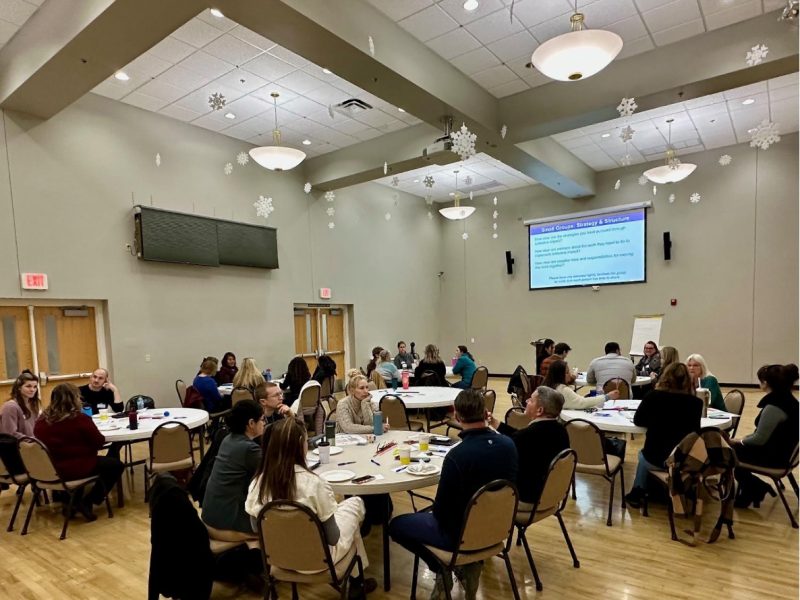
First Things First leads several collective impact projects throughout the region. Mark Remiker and Kelly McCue Nation – Research Scientists with the Center for Community Health and Engaged Research (CHER) – contribute to these collective impact initiatives to address community needs.
LB: I spent a couple of years working with the Regional Partnership Council talking about transformative change* versus transitional change**, walking through these pieces and working to hold on to some programmatic pieces, and then started playing with the idea of financially supporting some efforts that would address issues at the systems level. We brought in a consultant to conduct a meta-analysis of existing community health assessments and identify the needs most consistently highlighted across them. We had conversations with about 13 to 15 families to learn how they understood their own needs, how they navigated challenges, and what “support” looked like from their perspective. Based on her discoveries, the consultant suggested using a Collective Impact framework to consider next steps. This is when we brought in CHER’s Mark Remiker and Kelly McCue Nation.
*Transformative change: Focuses on proactive continuous change that is emergent, usually implemented over long periods of time, and involves a fundamental change (shift) in priorities, strategies, and culture with a future-focused vision.
**Transitional change: Focuses on incremental change or replacement of existing processes; usually reactive in nature to change/improve something in the past; change is controlled, deliberate, and planned
Mark had worked on the Northern Arizona Regional Health Equity Assessment, which the consultant referenced in her analysis and noted NAU CHER’s strong work on social determinants of health. Based on that, I brought CHER into a Regional Partnership Council meeting to discuss how they could help operationalize some of the Council’s goals through a systems-change lens. The Regional Council told me that if they were going to invest resources, they wanted us to focus on engaging leaders who had the authority to influence their organizations and move decisions forward. That way, when working groups were formed, they would have the backing and support needed to advance the work. So the first layer of work for Mark, Kelly, and me was creating a steering committee for YCYC.
We currently have three systems-change initiatives underway – two within Family Support and one within Health Systems. We also collaborate with Prevent Child Abuse Arizona, which is championing development of a statewide Family Resource Network.
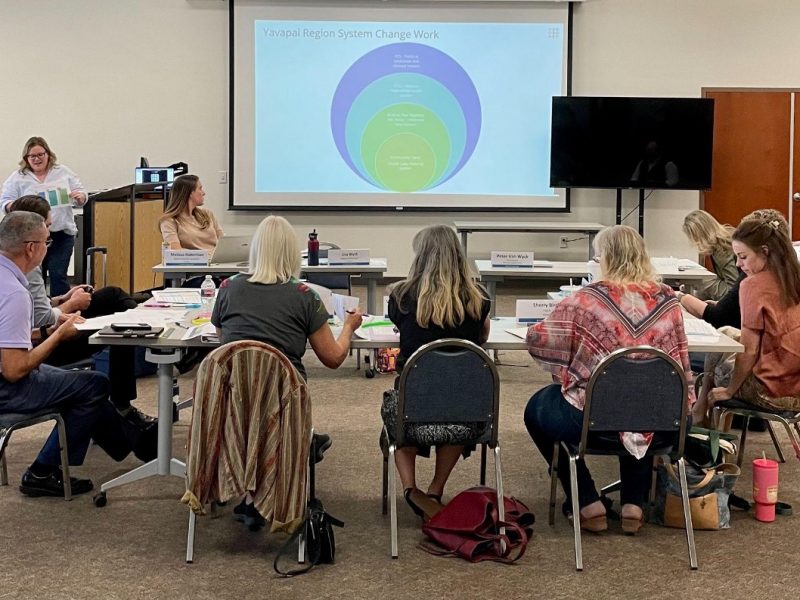
The Health Systems Change effort revived the YCYC name from pre-FTF days and began with a steering committee that created a common agenda and identified four priority strategies to improve health care access in Yavapai County.
A work group was formed to address the first strategy, a centralized resource and referral database, which has been in motion for the past 18–24 months. This work centers on recruiting health care organizations and community-based organizations across the region into the state’s closed-loop referral system, Community Cares. The remaining strategies identified by the steering committee include providing health insurance enrollment support for uninsured and underinsured families, expanding early childhood screenings, and building a pipeline to train and retain local medical professionals.
Together, these efforts reflect a coordinated approach to strengthening family support across Yavapai County.
What makes rural health unique?
LB: You cannot apply urban principles to rural settings. Period. The population density pockets are different and accessibility to transportation to get to what you need looks different. The types of needs vary because, generally speaking, rural living is a distinct sort of lifestyle. Because of this, rural health experiences and needs don’t mirror what you’re seeing in urban or denser areas. It’s imperative for people working and providing health services in rural communities to embrace these differences and work from there. Service providers must pay attention to what people need based on what they ask for and what their behaviors demonstrate. More interaction with subpopulation specific data and engagement is necessary for this sort of work. It’s a lot of upfront willingness and investment of time and funds for a result that’s going to come a little bit later and a little bit slower, but that can lead to stronger and more sustainable solutions for our communities.
Interested in learning more about community health research at NAU?
Visit CHER’s social media for short stories that highlight SHERC researchers, students, lab spaces, and more! Look for “Fit it in a Minute” posts.