February 6, 2026
Stronger Together: What Does the Intersection of Diabetes and Cancer Care Look Like?
A Conversation with Community-Campus Partners Melinda Smith, and Chelsea Kleinmeyer
Welcome back Fairness First readers!
This month we are observing World Cancer Day. Held on February 4th, World Cancer Day is a day to share stories and encourage cancer prevention. Melinda and Chelsea are participants of SHERC’s Community Campus Partnership Support (CCPS) Program. Their partnership focuses on strengthening cancer prevention, screening, and diabetes self-management for the Confederated Salish and Kootenai Tribal community. Melinda and Chelsea remind us that prevention, screening, and care do not happen in silos, but rather, in communities and across sectors.
About the Partners
MELINDA: I am an enrolled member of the Confederated Salish and Kootenai Tribes (CSKT). Currently, I’m a postdoctoral scholar at Northern Arizona University, Center for Community Health and Engaged Research (CHER). I was born and raised in Arlee, Montana which is located on the south end of the Flathead Reservation in the Jocko Valley.
CHELSEA: I am a nurse and I currently work for the Confederated Salish and Kootenai Tribal Health Department. I’ve been here just over 10 years and I am the Public Health Division Director.
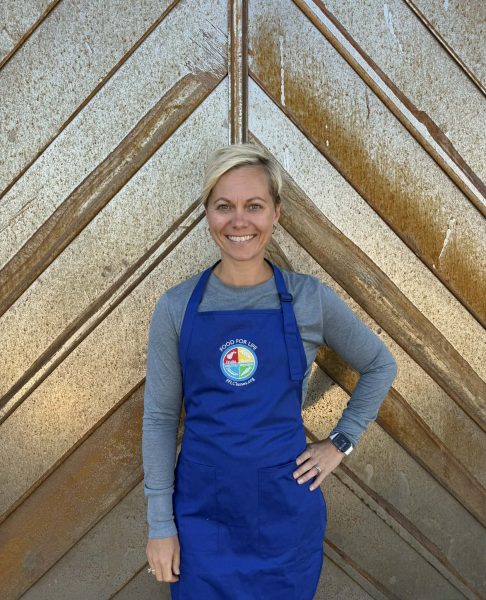
Cross-Sector Collaborations to Address Community Health
MELINDA: Our focus is on building partnerships and bringing together stakeholders* in the community who have a role in providing services related to maintaining a person’s health and well-being. Specifically, we are looking at enhancing efforts to improve cancer screening and prevention, as well as diabetes self-management.
*Community stakeholders are individuals, groups, and organizations that are affected by, have an interest in, or can influence health outcomes, policies, and programs within a community
A lot of our stakeholders include health programs across the sectors, really across disciplines. We’re looking at bringing in people from the diabetes program, clinics and hospitals that serve community members who are part of the Confederated Salishian Kootenai Tribal community. We’re at the very start of this endeavor and we’re hoping that it results in more collaborations between local health programs and other sectors. This includes things that are really important in our community, such as the culture committee. Our partnership will expand beyond just the healthcare field in a Western sense.
CHELSEA: My role in our partnership is to help connect Melinda with these different stakeholders. We’ve been able to sit down together and brainstorm about what the intersection of diabetes and cancer care looks like and identify the stakeholders on the reservation.
Our community is unique in that we have quite a few healthcare players on the reservation. We have a Tribal Health Department, two local hospitals with affiliated clinics, private clinics, and a Public Health Department. We’re focusing on bringing all of these stakeholders together because each of them touches our community members in some way.
Personal Passions Create Meaningful Work
MELINDA: This work and partnership are very personal to me because I belong to the community; they’re my family, they’re my Tribe, they’re my community. I developed my passion for improving health in Tribal communities when I was growing up. Having family members who are huge advocates and leaders in the community helped instill a passion for helping others. That was a huge part of why I pursued a career in public health and health promotion. The plan was always to be able to go back after I gained the education and skills I needed.
I’m really excited to have the opportunity to work within my home community. It’s really special to me. I know the CSKT health department, specifically Chelsea, and the other individuals involved in our partnerships are huge stakeholders within the community. Each of them play a really important role in providing healthcare and improving health. I’m very honored and happy to do this work and focus on enhancing healthcare and health services within the CSKT community.
CHELSEA: I love all things health and wellness. It is a passion of mine, especially in relation to lifestyle. Melinda and I are also hoping to spotlight that when we think about diabetes and cancer prevention – whether it’s primary, secondary, or tertiary prevention* – we need to think about lifestyle.
*Primary prevention focuses on stopping disease before it starts, commonly through vaccines and education; Secondary prevention detects and treats disease early on to stop progression. Screenings and disease monitoring are important in this phase; Tertiary prevention refers to management of existing disease to minimize impact.
We hope to identify those gaps in diabetes and cancer care. We all seem to operate in our own little silos and I hope that this work brings us together and promotes collaboration so that we can break down those silos for the betterment of our community.
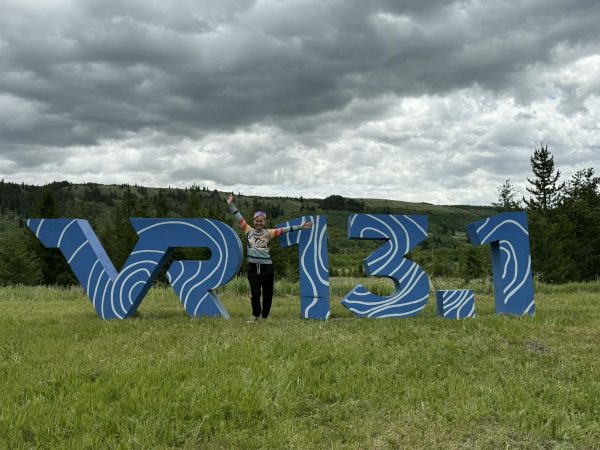
Story Telling and Resource Sharing Through Community-University Partnerships
MELINDA: Partnerships between community organizations/programs and universities/researchers are important because they combine practical and lived experiences with academic knowledge, local ways of knowing, and resources. Community organizations and partners are especially important in making a meaningful impact because they understand local needs, cultural context, and the real-world challenges and priorities within the community. Universities bring research expertise, access to additional funding sources, and technical tools to address challenges. I think it’s really important to have these combined perspectives to address health topics and challenges.
CHELSEA: I’ve been involved in relationships with universities and researchers for about eight years and what these partnerships help us to do is tell the story of what we’re seeing in the community. In my experience, it’s hard to communicate what we’re seeing with community members and the good work that we’re doing. Partnering with researchers has really helped us to be able to communicate our stories to the rest of the community.
What Does Collective or Community Cancer Prevention Look Like to You and Your Community?
MELINDA: It’s really important to have various stakeholders and disciplines involved. To me, collective or community cancer prevention looks like people from the community who are a part of a collaborative effort to reduce risks, increase awareness and remove barriers to care and early detection within the community. Engagement from community members is key to success.
In the communities I’ve worked with as well as the communities I’ve been a part of, this work means sharing accessible, culturally relevant information and resources with each other. We focus on enhancing what’s there – existing resources, programs, etc. – and then trying to address gaps in a very collaborative way. I want to emphasize that the community is most important in collaborative efforts between academic institutes and community partners. Having them at the table as equitable partners* is key in this work.
*In equitable partnerships, everyone’s knowledge and experience are respected, each partner has a voice in decisions, and support or resources are shared based on what each partner needs.
CHELSEA: To address cancer prevention collaboratively, we should be looking at healthcare from all angles. For me, cancer is both a public health and primary care concern. It also extends to settings like the dental chair. A collaborative approach is about making sure that everyone is delivering the same message, making sure that people are aware of the screenings available to them, and consistently delivering information about prevention.
Reach out if you want to learn more!
Melinda Smith: Melinda.Smith@nau.edu
Chelsea Kleinmeyer: chelsea.kleinmeyer@cskthealth.org
Interested in learning more about community health research at NAU?
Visit CHER’s social media for short stories that highlight SHERC researchers, students, lab spaces, and more! Look for “Fit it in a Minute” posts.